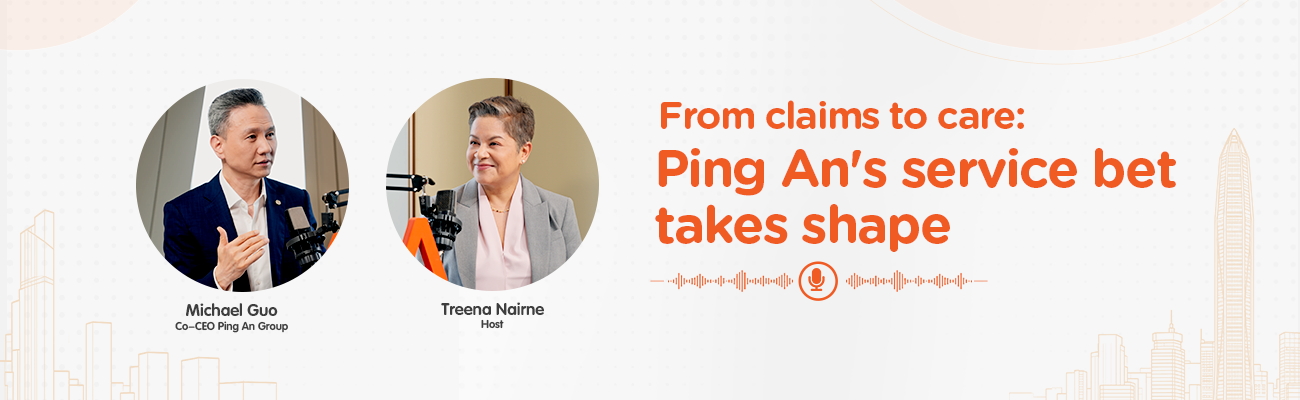
Timecode
00:00-00:59
An emergency medical evacuation from Indonesia demonstrates the value of coordinated care and practical support beyond insurance payouts.
01:14-03:22
The strategic shift to “finance + service”, combining financial protection with support before, during, and after major life events to build long-term customer relationships.
03:23-05:18
Connecting rescue teams, hospitals and families through a shared service network to provide timely assistance and keep everyone informed during an emergency.
05:19-06:33
How an international provider network supports customers across more than 100 emergency scenarios, while customer scale helps spread costs and makes services more affordable.
06:36-07:59
Assessing the strategy’s performance through policy persistency, customer retention and purchasing trends, and examining how scale supports lower costs, stronger margins and competitive pricing.
07:59-09:35
Providing family doctors, nutrition support, and connected health data to encourage healthier routines, deliver more personalized support, and create regular opportunities for customer engagement.
09:36-10:20
How combining financial strength with service capabilities aims to improve customer satisfaction and strengthen lasting relationships—positioning service as a competitive advantage for the next decade.
10:21-11:42
Bringing customer scale, provider networks, skilled teams, technology, AI, and data together to deliver coordinated services efficiently, capabilities that take time to build and integrate.
FAQ
Q: What is Ping An’s “finance + service” strategy?
A:The strategy combines financial products with services, including but not limited to emergency rescue, health care, and senior care. It aims to provide support beyond policy purchases and claims, build more enduring customer relationships, and ultimately create growth opportunities.
Q: How does Ping An’s global emergency rescue service work?
A:Eligible customers or their families can contact Ping An through a hotline or the Ping An member companies’ apps. Ping An then coordinates relevant medical and rescue providers . Support includes 38 services, such as remote health monitoring, urgent medical escort, emergency guidance, embassy assistance, and security evacuation.
Q:What is the geographic reach of Ping An’s global emergency rescue network?
A:The network covers more than 200 countries and regions and over 100 emergency scenarios, including medical evacuation and assistance in conflict zones. Services are available to eligible customers.
Q:How does preventive healthcare fit into Ping An’s insurance offering?
A:Services such as online family doctors, nutrition guidance, and medication reminders provide ongoing support beyond insurance claims. They aim to help customers manage their health and develop healthier habits, while creating regular opportunities for the insurer to connect with them.
Q:What capabilities are needed to deliver Ping An’s “finance + service” model at scale?
A:The model relies on a large customer base, an extensive provider network, experienced teams, and technology, AI and data infrastructure. The scale of the business can strengthen purchasing power and help spread costs, and coordination of providers and skilled teams make practical assistance possible. These capabilities need to work together to deliver reliable support while managing costs.
Q:What evidence supports the business case for Ping An’s “finance + service” strategy?
A:In the first half of 2026, customers who used Ping An’s health and senior care services had an insurance upsell rate 5.9 percentage points higher than non-users. Retention among customers entitled to these benefits was 93% over the 12 months ended June 30, 2026. These figures provide initial support for the business case, but do not establish that services caused the outcomes or that the financial benefits outweigh delivery costs.