Insights, Events and Videos


Living in Harmony with Nature: Ping An’s Approach to Protecting Biodiversity
Ping An shares how insurance, technology and partnerships can support biodiversity, aligning with the APEC 2026 theme, "Building an Asia-Pacific Community to Prosper Together."
|
Richard Sheng, Secretary of the Board of Directors of Ping An Group
|
A migratory bird arriving in Shenzhen encounters two landscapes: the wetlands that offer a place to rest, and the towers that define a global business city. Helping it move safely through both is one practical expression of living in harmony with nature.
That ambition extends far beyond one city. Migratory birds cross borders and habitats throughout the Asia-Pacific. Protecting them requires local decisions along their routes—how buildings are managed, how wetlands are protected, and how communities participate in conservation.
|
These connections offer a useful perspective on shared prosperity. Economic development and biodiversity conservation cannot be treated as separate concerns. Communities depend on healthy ecosystems, while conservation efforts need to account for people’s livelihoods and the realities of economic activity.
At Ping An, our approach is to apply our financial and technological capabilities to address these practical challenges. Insurance, charitable trusts, and technology can help address environmental risks, manage the costs of living with wildlife, and bring more people into the work of protecting nature. They cannot replace conservation expertise, but they can support the people and institutions working to safeguard biodiversity.
Protect biodiversity through practical action and conservation funding
A company’s contribution to biodiversity should begin with its own operations.
At Ping An Finance Center in Shenzhen, we are exploring how a high-rise building can better coexist with birds moving through the city. Between March and May 2026, we collected bird-call data through acoustic monitoring equipment installed at the South Tower, providing information for researchers on seven local bird species. We also installed window markers to help prevent birds from colliding with the building. A biodiversity exhibition on the building’s observation deck invites visitors to discover the wildlife that shares their urban environment.
Together, these initiatives connect research, practical intervention, and public awareness.
They are not a complete solution. Their value lies in linking observation with action—and in recognizing that the built environment is part of the ecological landscape.
The same principle applies to financial services. Providing compensation after damage occurs is important, but so is identifying and reducing risks beforehand. Technology can support this shift by helping researchers, conservation specialists and businesses better understand where intervention is needed.
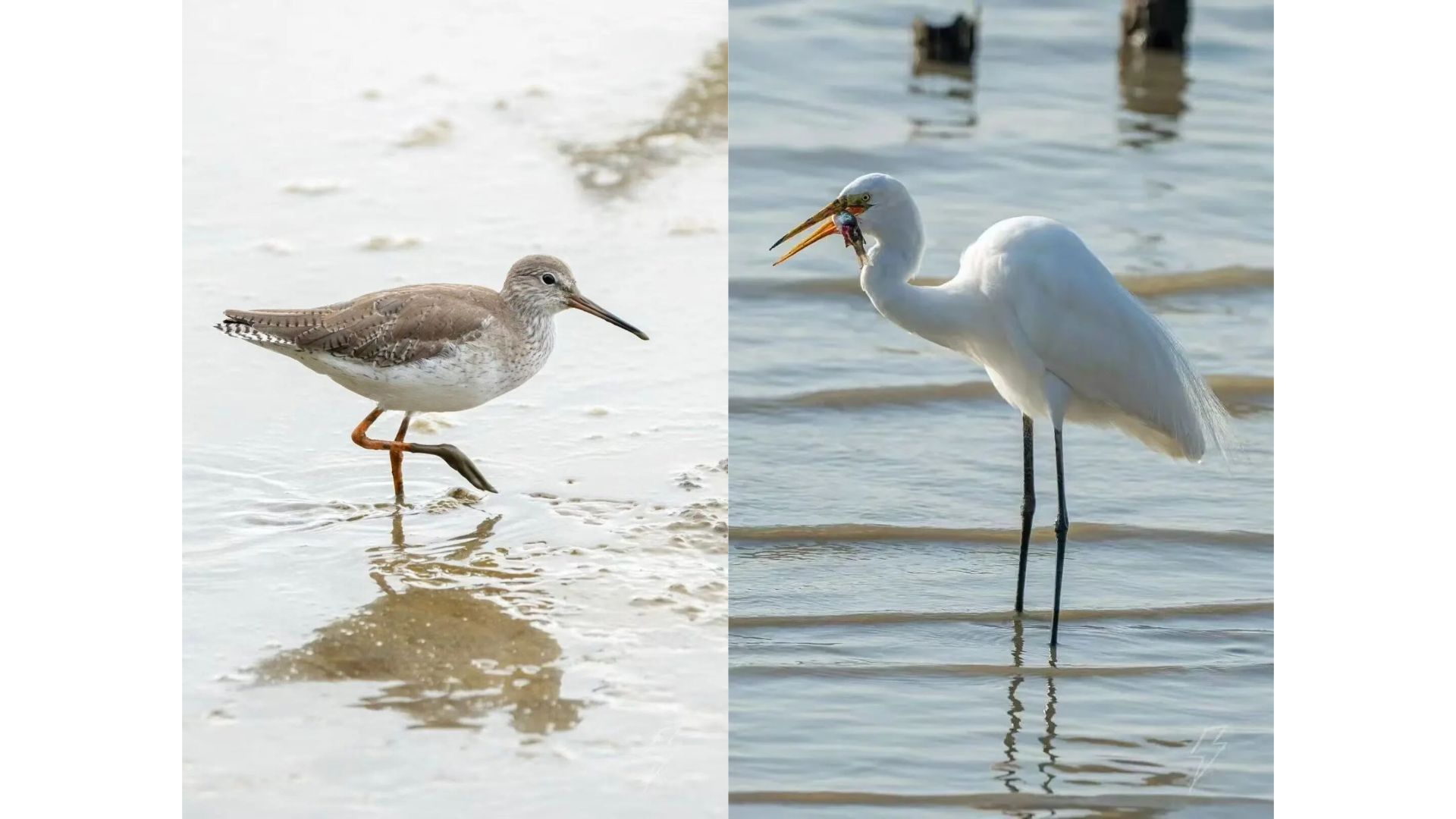
Our company’s efforts to protect wildlife extend beyond our own buildings. We also support wetland protection. Shenzhen Bay lies along the East Asian–Australasian Flyway, providing a stopover and wintering habitat for migratory birds, such as black-faced spoonbills, grey herons and great egrets. In 2023, Ping An established a charitable trust dedicated to mangrove conservation. Further support in 2026 is helping fund species protection, ecological conservation, and nature education in Shenzhen Bay.
This is a complementary role for finance in protecting biodiversity: creating dedicated mechanisms to direct resources to conservation priorities and working alongside specialist partners.
Support rural communities and protect wildlife
Biodiversity conservation also has a human dimension. When wild animals damage crops, or other property, or cause injury, it can cost local communities. Conservation becomes harder to sustain if those costs are borne solely by the people living closest to wildlife.
Insurance can help address this challenge.
In Guizhou, Ping An’s wildlife damage compensation insurance provides RMB3.2 billion in coverage for harm caused by 32 protected wildlife species. The approach combines personal injury compensation, property protection, and support for ecological restoration.
The underlying principle is straightforward: protecting wildlife and protecting people should reinforce each other. A mechanism that helps households recover from losses can form part of a broader response to human–wildlife conflict, alongside prevention, public education, and conservation management.
Insurance can also support wildlife rescue itself. In Gaoyou, a city in Jiangsu province in eastern China, Ping An worked with local forestry authorities to introduce rescue insurance for Oriental storks, a migratory bird afforded China’s highest level of national wildlife protection. When a stork with a fractured wing was rescued in October 2025, the claim payment was made within 24 hours.
Insurance makes funds available when intervention is needed. It does not replace conservation expertise, but it can help specialists act quickly without financial uncertainty.
Build partnerships for lasting protection
Financial protection is most useful when it works alongside monitoring, specialist knowledge, and community participation.
Ping An’s ancient-tree protection program brings these elements together. Its rescue insurance provides more than RMB1.26 billion in risk coverage for over 79,000 ancient trees across China. The program includes using satellite, aerial and ground-based tools to support risk identification and response. Expert involvement helps connect financial protection with the practical work of tree care.

Ancient trees also reveal how conservation intersects with local life. Around Taihu Lake, near Shanghai, a locally developed hiking route invites visitors to explore old trees and the communities surrounding them. Insurance helps cover losses from tree damage from storms, pests and lightning and other threats, while the route connects tree preservation with local tourism.
These trees are more than natural landmarks. They give communities a sense of continuity across generations and provide a tangible connection between communities and their environment. Protecting them brings ecological, cultural, and local economic interests together.
Public participation adds another dimension to environmental protection. Through Ping An’s public welfare platform, customers can contribute to wetland protection by participating in walking activities that trigger donations from Ping An. As the customers reach milestones, Ping An releases funding. While the platform helps raise public awareness, nature education helps children understand why these habitats matter.
Our ancient-tree program for young people similarly combines appreciation of nature with support for young people’s emotional well-being. The program, developed with the Beijing Normal University Education Foundation, gives children opportunities to explore nature through sight, sound, smell, and touch.
These initiatives serve different purposes, but share a lesson: financial tools work best as part of a wider partnership. Insurers contribute risk-management capabilities. Researchers and conservation organizations contribute expertise. Public authorities and communities contribute local knowledge and sustained involvement.
Share lessons across the Asia-Pacific
No single insurance product or conservation project can be simply replicated from one place to another. Habitats, regulations and community needs differ. Financial coverage or public engagement should not be mistaken for proof of ecological improvement. Understanding outcomes requires evidence, monitoring, and continuous learning.
What can travel across borders are the principles: prevent harm where possible, support communities facing the costs of coexisting with wildlife, and connect finance with conservation expertise.
For the Asia-Pacific region, these principles have particular relevance. The cities, agriculture, and natural habitats are closely connected. Migratory species remind us that ecological systems extend beyond national boundaries. Local action can contribute to a wider effort, and sharing practical experience can help others develop approaches suited to their own circumstances.
Living in harmony with nature is not an abstract ideal. As leaders gather for APEC 2026, Ping An’s initiatives demonstrate how financial tools can support conservation as part of an ecosystem of insurers, researchers, environmental organizations, public authorities, and communities. Through risk management, technological innovation, and community support, we aim to protect the natural heritage of the Asia-Pacific—and turn APEC 2026’s vision of "Building an Asia-Pacific Community to Prosper Together" into a sustainable, living reality.